
By Assemblyman Doug Smith
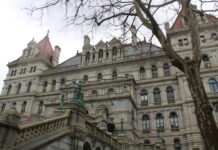
ALBANY – As a member of the New York State Assembly, let me say something that some people in Albany are uncomfortable saying publicly: withholding legislators’ paychecks during budget negotiations is bad public policy and weakens the independence of the Legislature.
And no, this is not about politicians wanting sympathy.
I believe in accountability. If elected officials are not doing their jobs, the public has every right to be frustrated, but New Yorkers also deserve honesty about how government actually works, and right now there is a serious structural problem built into New York’s budget process that almost nobody wants to discuss openly.
We are currently negotiating a state budget approaching $270 billion that impacts nearly 20 million New Yorkers. These are not casual conversations. These negotiations determine school aid, healthcare funding, public safety priorities, taxes, transportation, environmental policy, and countless other issues that directly affect families across this state.
At the same time, the Legislature continues passing short-term budget extenders to keep government operating while negotiations continue. State employees are working. Services continue uninterrupted. The government remains open, yet individual legislators stop receiving paychecks indefinitely.
The Governor continues receiving a paycheck, government continues functioning, but rank-and-file legislators are expected to continue negotiating one of the largest budgets in America without compensation for an unknown period of time.
That is an imbalance, and it matters.
Now personally, I am fine. I could hold out for quite a while without receiving a paycheck. I was fortunate growing up to have parents who taught me fiscal responsibility, discipline, and the importance of planning ahead. My mother especially drilled those lessons into me from a young age. Frankly, the country would probably benefit from having her as Treasury Secretary.
But this issue is bigger than me. The problem is what this system does institutionally to the Legislature over time.
New York already has one of the strongest executive budget systems in the country. Unlike the federal government, where spending bills originate in Congress, the Governor in New York possesses enormous leverage throughout the budget process from the very beginning.
Then we add another layer: legislators’ paychecks are withheld indefinitely during negotiations. That creates pressure – real pressure.
Not every legislator is in the same financial position. Some members are raising children. Some are paying mortgages, rent, student loans, childcare costs, or supporting aging parents. Some do not come from wealth and do not have large outside assets to fall back on. Beginning in 2027, outside earned income for legislators will also be capped, making many members even more financially dependent on their legislative salary.
This is not about corruption. It is not about claiming legislators are “for sale.” I reject that kind of cynical nonsense. But anyone who understands human nature understands this: financial pressure changes negotiating environments.
The danger is not necessarily some dramatic act of wrongdoing. The danger is more subtle. It is the possibility that legislators begin feeling pressure to simply get to a deal, any deal, because the financial uncertainty drags on week after week.
That is not how a co-equal branch of government should function.
The representatives of the people should never be placed in a position where their personal financial endurance becomes part of negotiations involving a $270 billion state budget. A legislator’s ability to fight for their district should not depend on whether they can personally afford to go months without income. And if we are not careful, this system will eventually reshape who is willing or able to serve in public office. Over time, it favors independently wealthy individuals or those financially insulated enough to absorb prolonged periods without compensation.
That is unhealthy for representative government.
New York should want teachers, small business owners, working parents, veterans, younger professionals, and middle-class individuals serving in the Legislature. Public service should not slowly become something only financially secure people can realistically afford to do. Ironically, a policy originally intended to increase accountability may actually weaken thoughtful negotiation and increase pressure to accept unfinished or imperfect agreements simply to end the uncertainty.
I believe legislators should be accountable, absolutely. But I also believe New Yorkers deserve a Legislature capable of negotiating independently, thoughtfully, and aggressively on behalf of their communities without artificial financial pressure hanging over individual members during one of the most important constitutional responsibilities entrusted to state government.
That is not weakness. That is protecting the integrity and independence of the people’s branch of government.
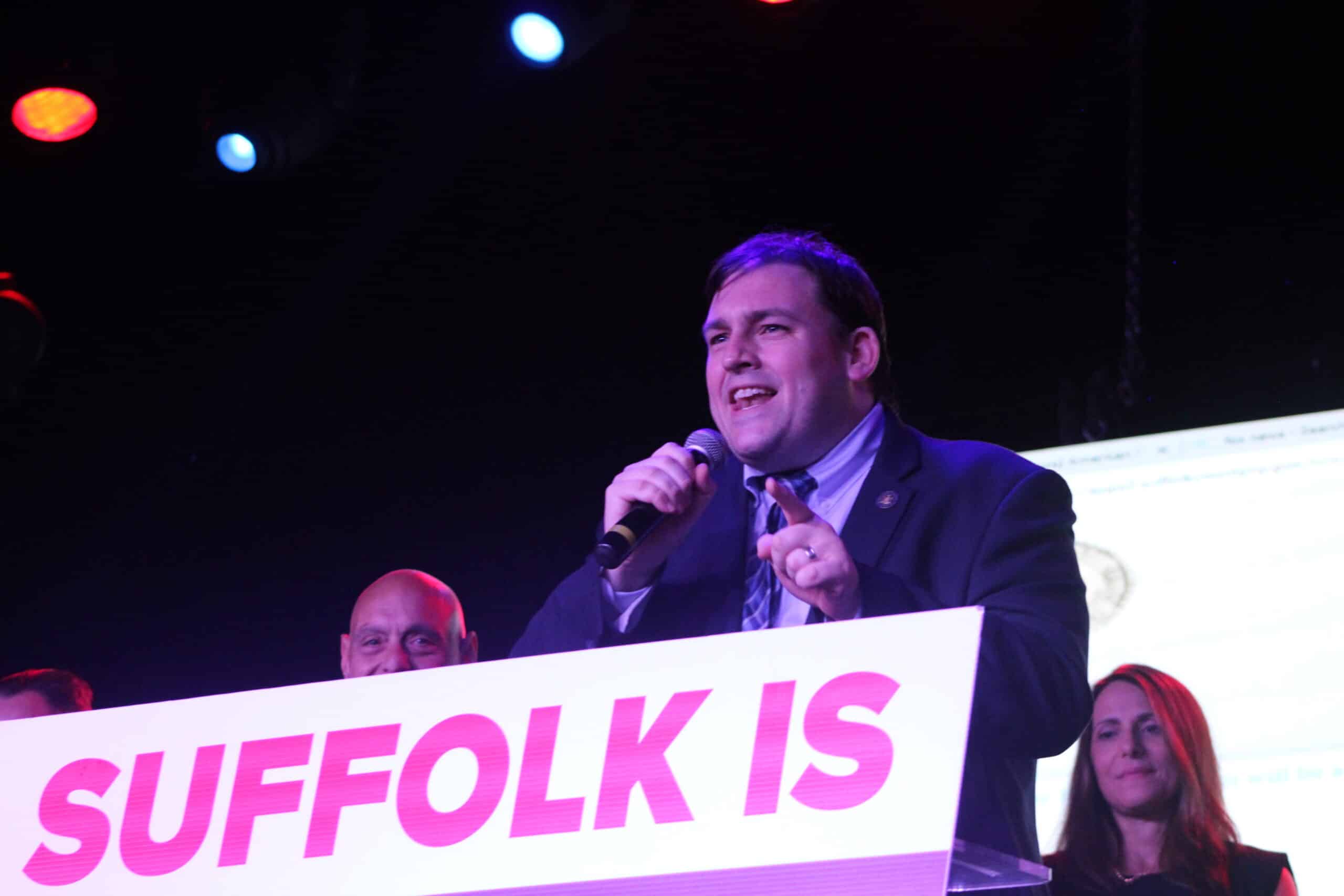
Assemblyman Doug Smith (R-Holbrook) has represented the Fifth District in the New York State Assembly since 2018. The Fifth District is split between the Towns of Brookhaven and Islip, containing the communities of Lake Grove, Holbrook, and parts of Bohemia, Centereach, Coram, Farmingville, Holbrook, Holtsville, Islandia, Lake Ronkonkoma, Medford, North Patchogue, Ronkonkoma, and Selden.
Assemblyman Smith serves as Ranking Member of the Education Committee and serves on the committees on Aging; Energy; and Higher Education, and serves on the Commission of the Future of the Long Island Power Authority.
The Fifth District office is located at 4155 Veterans Memorial Highway, Suite 9, in Ronkonkoma and can be reached at 631-585-0230.