


ALBANY – Across New York, we have made a clear commitment on paper: crime victims have rights. Those rights are codified in law, reinforced in policy, and frequently cited in debates about justice and fairness.
But laws written in statute books do not always translate into meaningful experiences for the people they are meant to protect. That is why, alongside my Senate colleagues Rob Rolison (R-Poughkeepsie) and Patrick Gallivan (R-Elma), I hosted a series of statewide Crime Victims Roundtables to listen directly to survivors and assess how our laws and policies function not in theory, but in practice.
What we heard was sobering, consistent, and impossible to ignore.
Participants from every corner of the state shared deeply personal experiences navigating a system that too often leaves them feeling like an afterthought. While New York has taken steps to enshrine victims’ rights, the implementation, enforcement, coordination, and communication of those rights remain uneven at best, and at times, wholly inadequate.
One of the most pressing concerns raised was the failure of timely and reliable notification. Victims described not being informed about arrests, arraignments, plea agreements, sentencing decisions, or even the release of offenders. These are not minor administrative oversights; they are moments that carry profound implications for a victim’s safety, emotional well-being, and ability to participate meaningfully in the justice process.
Equally troubling were accounts of orders of protection being inconsistently issued, enforced, or communicated. For many victims, these orders are a critical line of defense. When they are not handled with consistency and clarity, that line becomes dangerously thin.
Another recurring theme was the disconnect between policymaking and real-world impact. Victims emphasized that lawmakers often underestimate how changes to criminal procedure, pretrial release conditions, sentencing, and discovery law reforms directly affect their safety and access to justice. These policies are not abstract legal frameworks; they shape whether victims feel protected, informed, and heard.
We also heard about significant gaps in access to trauma-informed, survivor-centered services. Local service providers, who are often the first and most consistent point of contact for victims, are operating with limited and unstable resources. These organizations are doing extraordinary work under difficult circumstances, but they cannot meet the full scope of need without stronger, more reliable support.
Compounding these challenges is a lack of coordination across the systems that victims navigate. Law enforcement, courts, hospitals, corrections, and service providers often operate in isolation, leading to breakdowns of communication and continuity of care. For victims, this can mean repeating their story multiple times, facing conflicting information, or falling through the cracks entirely.
These roundtables made one thing abundantly clear: while our intentions as policymakers may be strong, our system is not consistently delivering for the people it is meant to serve.
But listening is only the first step. Acting on what we heard is what truly matters.
In response to these findings, we have developed a comprehensive legislative package aimed at strengthening victims’ rights, improving public safety, and enhancing accountability within the criminal justice system. This framework reflects the lived experiences shared during our roundtables and represents a balanced, common-sense approach to reform.
Among the proposals is the creation of a statewide Crime Victims Advocate, an independent voice dedicated to ensuring that victims’ rights are upheld and that their concerns are addressed consistently across New York. We are also advancing legislation to address ‘Raise the Age’, ensuring that policies intended to reform the system do not inadvertently compromise victims’ safety.
Our package includes ‘Sarah’s Law’, which addresses the abatement ab initio doctrine, helping to ensure that justice is not erased in the event of a defendant’s death before an appeal is completed. We are calling on the Division of Criminal Justice Services to produce annual reports on violent crime fatalities, bringing greater transparency and data-driven insight into public safety needs.
We are also working to clarify the legal definition of strangulation; an often misunderstood but highly dangerous form of violence, and to undertake a comprehensive review and strengthening of the Sex Offender Registration Act through the Sex Offender Registration Modernization and Victim Safety.
In addition to these new proposals, we are continuing to advance legislation previously introduced to address ongoing challenges. This includes repealing problematic portions of the current discovery law that have created significant obstacles for prosecutors and, in turn, impacted victims. We are advocating for the ability of courts to conduct pretrial threat assessments under the PROTECT Act, giving judges greater discretion in determining release conditions based on risk.
We are pushing forward with ‘Nick’s Law’ to increase penalties for fatal hit-and-run incidents, as well as ‘Pete’s Law’, which would eliminate the statute of limitations, for such crimes and ensuring that justice is not constrained by arbitrary timelines. Other measures aim to protect victims’ privacy by allowing courts to withhold sensitive information in cases involving criminal street gangs or enterprises.
Taken together, these proposals are designed to address the systemic gaps identified through our roundtables. They seek to ensure that victims receive timely notification, have meaningful opportunities to participate in the justice process, and can rely on a system that prioritizes safety and dignity.
Importantly, this legislative framework does not come at the expense of due process. Protecting victims and upholding constitutional rights are not mutually exclusive goals. In fact, a fair and accountable system demands both.
The voices we heard during these roundtables were powerful reminders that behind every policy debate are real people. Individuals whose lives have been irrevocably changed by crime. Their willingness to share their experiences, often at great personal cost, is an act of courage that demands more than acknowledgment. It demands action.
Encouragingly, it is clear that this message is beginning to resonate in Albany. Governor Kathy Hochul (D-Hamburg) recently announced an additional $23 million investment to combat domestic violence and expand services for survivors, with almost $2.3 million directed specifically to Suffolk County. This commitment represents a meaningful step forward towards addressing the gaps identified at our roundtables, particularly the urgent need for stronger, more stable support systems and continuity in agency collaboration for survivors. While there is still much work to be done, this investment signals growing recognition that supporting victims must remain a central priority in our public safety efforts.
As lawmakers, we have a responsibility to ensure that victims are not left to navigate a fragmented system alone. We must build a more coordinated, transparent, and responsive framework; one that recognizes victims not as bystanders, but as central participants in the pursuit of justice.
These roundtables and the legislative package they inspired represent a critical step forward. They are grounded in lived experience, informed by practical challenges, and guided by a commitment to fairness and accountability.
New York can and must do better. Victims deserve a system that works for them, not just in principle, but in practice. We must stand with and support victims at every stage of the process. They should never feel forgotten!
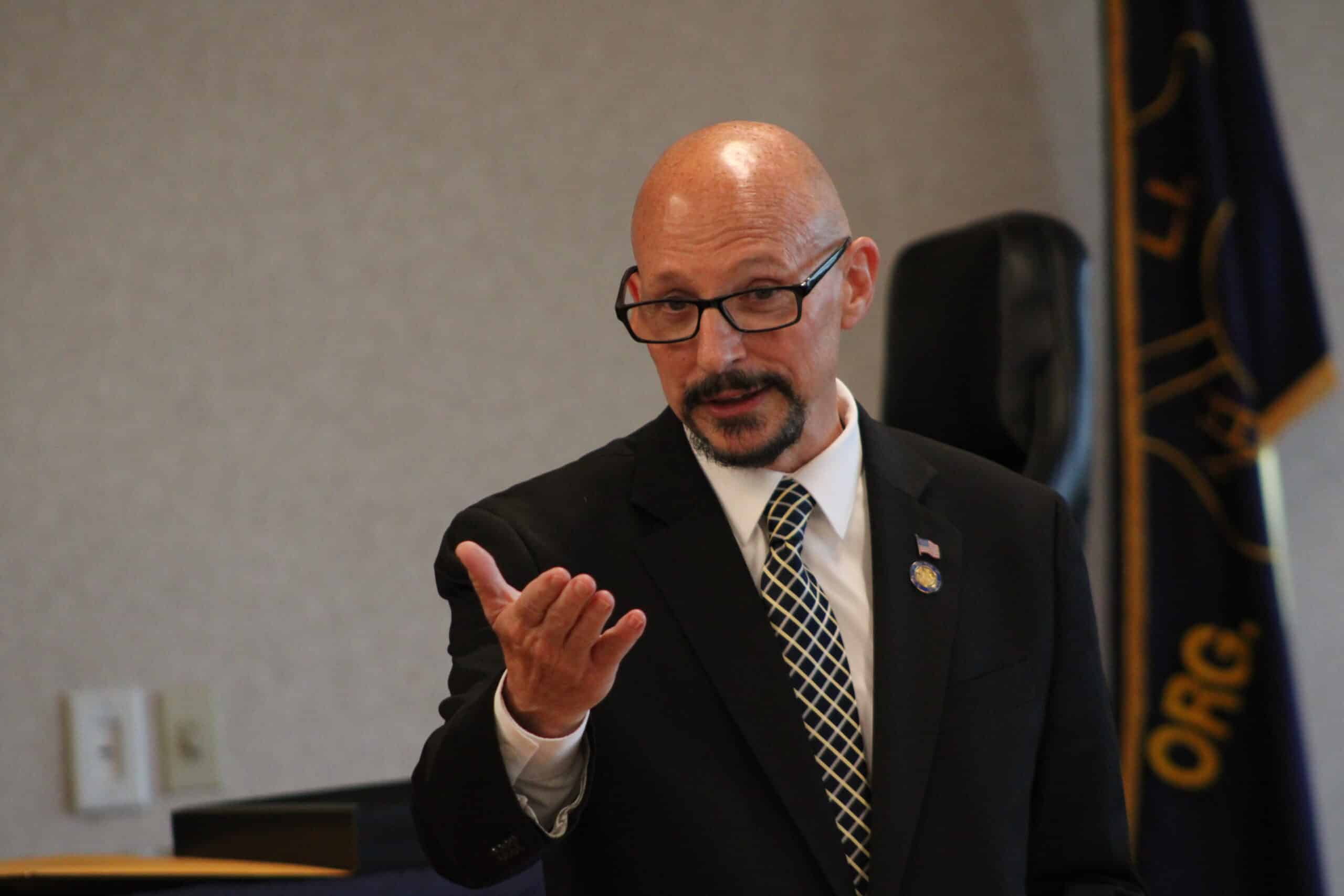
Senator Dean Murray (R-East Patchogue) has represented the Third District in the New York State Senate since 2023 after having represented the Third Assembly District from 2010 to 2013 and again from 2015 to 2018.
The Third District contains Bellport, Blue Point, Brookhaven hamlet, Center Moriches, East Moriches, East Patchogue, Farmingville, Gordon Heights, Lake Grove, Manorville, Mastic, Mastic Beach, Medford, Moriches, North Bellport, North Patchogue, Patchogue, Shirley, South Haven, Upton, and Yaphank, as well as parts of Calverton, Centereach, Coram, Eastport, Holbrook, Holtsville, Lake Ronkonkoma, Middle Island, Ridge, Selden. The district also contains a small portion of Holbrook within the Town of Islip.
Senator Murray serves as Ranking Member on the committees on Commerce, Economic Development, and Small Business; Libraries; and Social Services. He also serves on the committees on Budget and Revenue; Codes; and Higher Education.
The Third District office is located at 90-B West Main Street in Patchogue and can be reached at 631-360-3356.