


One of the biggest questions regarding the ever-present issue of water quality in Suffolk County is how wastewater can be reused, apart from simply being removed from vital waterways.
Suffolk County recently passed I.R.1690-2025, which appropriates funds for a multi-year water reuse and runoff remediation study in conjunction with the United States Geological Survey (USGS). The project will monitor and evaluate five rivers within Suffolk with the hopes of protecting groundwater resources and improving the health of the rivers and tributaries – as well as the bays into which they flow.
The USGS monitoring stations will be installed and operated at Carlls River in Babylon, Sampawams Creek in Babylon, the Connetquot River in Oakdale, the Nissequogue River in Smithtown, and the Peconic River in Calverton. The initiative will be designed to produce “accurate, real-time water quality data while increasing public access” to the information. The study will also consist of studying the flow, organic and inorganic runoff, and stream temperatures.
The study will also take into account the variables that each river might face, with solutions being gauged appropriately.
Suffolk’s sole-source aquifer provides drinking water for about 1.5 million residents, vis-à-vis more than fifty streams and rivers throughout the county.
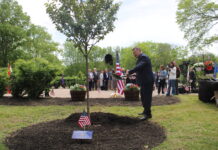
Legislator Steve Flotteron (R-Brightwaters) said at a press conference at Carlls River last week that while the efforts to provide clean drinking water and remediating the quality in waterways are a priority, efforts need to go further.
“It’s not just sewers and I/A systems; they’re a major part of things,” said Flotteron. “Increasing challenges such as nitrogen pollution, emerging contaminants, and saltwater intrusions require science-driven, proactive solutions. We’ve had sewers in some areas for years, but our clams haven’t come back, and other problems have grown. We need to find all the different things we need to do to resolve it.”
Strategies taken by the County emphasize “long-term monitoring, data transparency, and public engagement,” according to Flotteron.
Road runoff is a large component of this initiative. Road runoff involves any substances and chemicals left behind by vehicles and/or debris, especially in times of flash floods and rainstorms, that spill into the drainage systems, but further contaminate the waterways into which those systems empty. Flotteron even mentioned that car washes adjacent to rivers could be an area of further scrutiny.
Flotteron also discussed a live board in the lobby of the H. Lee Dennison Building in Hauppauge where the public can observe the monitoring in real time.
“All these streams have one thing in common, they all flow into the Great South Bay,” said Presiding Officer Kevin McCaffrey (R-Lindenhurst). “This is one of the biggest issues we have. We expect the USGS survey to come out sometime next year. One of the ways we can recharge our aquifer is to control the stormwater runoff.”
Legislator Tom Donnelly (D-Deer Park) added that the Carlls River is an “ecological treasure”, but that it is “susceptible to water runoff,” adding his appreciation for the ongoing sewer work for Deer Park and North Babylon.
“When it rains, the rainwater picks up pollutants such as bacteria, pathogens, pet waste, oil, and plastic and carries it to our local creeks, bays, and rivers,” said Maureen Murphy, of Citizens Campaign for the Environment. “This leads to toxic rides, fish kills, closed beaches, and closed shellfishing areas.”
Enrico Nardone, Executive Director of the Seatuck Environmental Association called Suffolk’s water its “most valuable resource.”
Andrew Mirchel, of Save the Great South Bay, a self-avowed “creek defender” of West Islip, called the initiative a “gratifying day”, especially as how the “citizenry of Long Island has raised their level of environmental awareness and their ability to do something about it.”
Suffolk County Executive Ed Romaine (R-Center Moriches) spoke highly of the USGS from his prior experience working with them on the East End.
“I know they can pinpoint some of the problems that we have with our waterways,” said Romaine, adding that the next step will be a lift, based on the USGS’ findings. “It’s not going to be easy. It may require bioswales or filters in all of our road drains. We’ve got to be prepared to make the adjustments. It might be expensive, but we’ll be saving the future of this island.”
Romaine spared no expense in calling on Governor Kathy Hochul (D) to release funds from the Environmental Bond Act to Suffolk, stating that Hochul could be “very, very helpful” in that regard.