

We’re continuing our look at the standing – permanent – committees of the United States Senate. We’ve reviewed fourteen so far and we’ll look at more this week.
Rules and Administration
This committee is responsible for the rules of the U.S. Senate, a topic we’ll discuss in-depth in this column at a later date. It’s also responsible for administration of congressional buildings, credentials and qualifications of members of the Senate, and contested elections. Since the Senate has a tradition of open, practically unfettered debate, this committee is less powerful than its House counterpart.
The committee was created in 1867 as a select committee, becoming a standing body in 1874. In 1947, it took over the functions of the now-dissolved committees: Committee to Audit and Control the Contingent Expenses of the Senate; Committee on Education and Labor (some jurisdictions were transferred to the HELP Committee); the Committee on Enrolled Bills; and the Committee on Privileges and Elections.
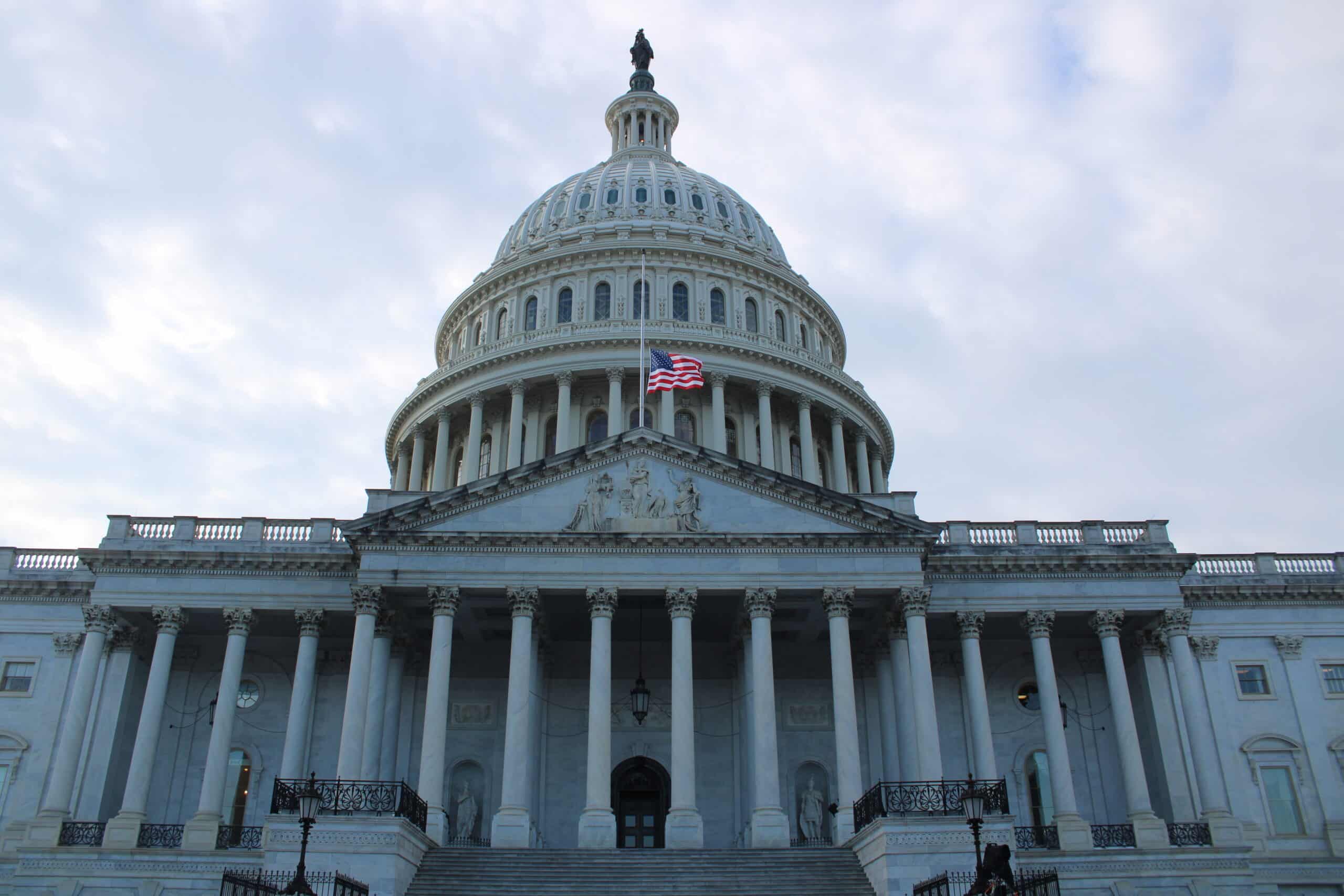
In lieu of subcommittees, the jurisdictions of the at-large body are stipulated in Rule XXV of the U.S. Senate. Those jurisdictions consist of administration of the Senate office buildings and the Senate wing of the Capitol; assignment of office space; Senate rules and regulations; floor and gallery rules; corrupt practices; federal elections; nominations to fill a vacancy in the Vice Presidency; the Government Printing Office; congressional meetings and attendance; expenditures out of the Senate contingent fund; presidential succession; purchasing of books and manuscripts and the construction of monuments to the memories of individuals; art, statuary, and pictures in the Capitol and Senate Office Buildings; services to the Senate, including the Senate restaurant; the Library of Congress; the Smithsonian Institution; and the Botanic Gardens.
The Rules and Administration Committee is also tasked with crafting a continuing study of organization and operation of the Senate with the purpose of making improvement recommendations and strengthening Congress. Simplifying operations and improving relationships with other branches of the federal government are key components.
The committee is divided 9R-8D. Mitch McConnell (R-KY) serves as Chair and Alex Padilla (D-CA) (pictured below) serves as Ranking Member.

Rules and Admin. Committee (Credit – Matt Meduri)
Small Business and Entrepreneurship
This committee has oversight of the Small Business Administration (SBA). Created in 1940 as a special committee, it became a select committee in 1950 and a standing committee in 1981. Its name was the Committee on Small Business until 2001, when Senator John Kerry (D-MA) changed its name to its current one.
In the 1950s, the committee’s jurisdiction was expanded to include the power of issuing subpoenas and the ability to convene during sessions, recesses, and adjourned periods of the Senate, abilities similar to other committees. In the mid-1970s, the committee’s oversight grew again to include all legislation relating to the SBA.
Today, the committee presides over matters that apply to small businesses that are not already under the jurisdiction of a separate committee. The committee is tasked with researching the state of American small businesses and recommending legislation to the full Congress for the benefit of small businesses. The committee also reviews nominations for positions within the SBA, namely the Administrator, the Chief Council for Advocacy, and the Inspector General.

and Entrepreneurship Committee (Credit – Matt Meduri)
The committee has no subcommittees. It is divided 10R-9D. Joni Ernst (R-IA) serves as Chair and Ed Markey (D-MA) (pictured above) serves as Ranking Member.
Veterans’ Affairs
This committee was created in 1970 to create a body exclusively investigating and specializing on Veterans’ affairs. From 1947 to 1970, Veterans’ benefits and compensation issues were handled by the Finance Committee, while education, medical care, readjustment, and rehabilitation were handled by the Committee on Labor and Public Welfare.
The government’s prerogative on Veterans’ Affairs for Veterans and their families had been mostly financial. Veterans of the Revolutionary War, the War of 1812, the Mexican War, the Civil War, and the Spanish-American War were all under this committee’s jurisdiction as far as compensation was concerned.

Affairs Committee (Credit – Matt Meduri)
World War I saw the federal government’s response to Veterans’ Affairs change, as war risk insurance changed the Senate’s jurisdiction over Veterans’ benefits. The Senate Finance Committee typically handled this from 1917 until 1946. The Finance Committee’s Servicemen’s Readjustment Act of 1944, the G.I. Bill of Rights expanded the umbrella of benefits to unemployment assistance, education, housing and business loan guarantees, vocational training, and medical and pension benefits. According to the committee’s website, this bill is believed by experts to have been one of the most “important elements in the expansion of the middle class following World War II.”
The committee’s website says that five current Senators are Veterans: Jim Banks (R-IN), Richard Blumenthal (D-CT), Tammy Duckworth (D-IL), Ruben Gallego (D-AZ), and Tim Sheehy (R-MT). The committee is composed of nineteen members.
The committee is divided 10R-9D, with two Independents caucusing with the Democrats. Jerry Moran (R-KS) (pictured below) serves as Chair and Richard Blumenthal (D-CT) serves as Ranking Member.