

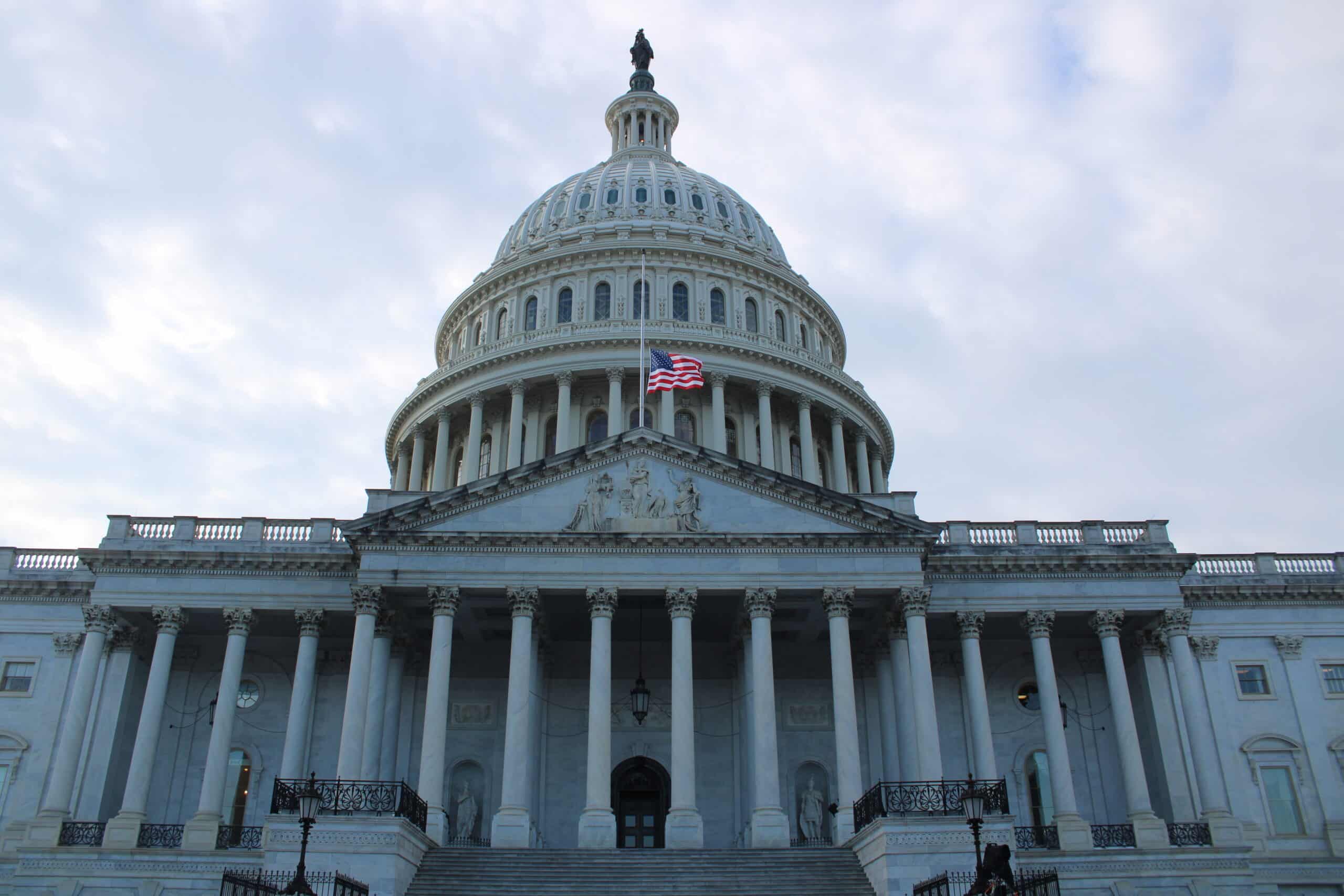
Cover photo: U.S Capitol Building (Credit – Matt Meduri)
Having discussed gerrymandering at length these past few weeks, we’re returning to our look at the standing – permanent – committees of the U.S. Senate.
We’ve examined eleven of the sixteen standing committees so far.
Homeland Security and Governmental Affairs
This committee is the chief oversight committee of the U.S. Senate. It has oversight of the Department of Homeland Security (DHS) and the functions of the government itself. Its jurisdiction includes the National Archives, budget and accounting measures – sans appropriations – the U.S. Census, the federal civil service, the affairs of the District of the Columbia, and the U.S. Postal Service (USPS). This committee was just known as Governmental Affairs until the Homeland Security aspects were tailored on in 2004.
This committee is unique in that the committee chair is the only Senate committee chair who can issue subpoenas without a committee vote, making it one of the more powerful Senate bodies.
The committee was formed as the Committee on Expenditures in the Executive Departments in 1921, later becoming the Committee on Government Operations in 1952, and as the Committee on Governmental Affairs in 1978. The committee’s scope has since been expanded to focus on responses to major catastrophes, such as Hurricane Katrina, homegrown terrorism in the country, and the vulnerabilities of the United States’ critical networks.
The Permanent Subcommittee on Investigations (PSI) was formed in March 1941 as the Truman Committee. This body initially investigated war contracts and aircraft procurements, later pivoting to export control violations, the trial of Nazi war criminal Ilse Koch, and the Mississippi Democratic Party’s sale of postal jobs. The Korean War, Joseph McCarthy, labor racketeering and organized crime, the Oil-for-Food Program, and the 2008 financial crisis have all been areas of focus of the PSI Subcommittee.
The Subcommittee on Border Management, Federal Workforce, and Regulatory Affairs is charged with examining the federal rulemaking process and evaluating its efficacy, economic impact, and legal authority; reviewing federal contracting and procurement; assessing the management, efficacy, and economics of the agencies and departments of the federal government; examining and assessing the federal workforce and employee issues, as well as their compensation, benefits, and retirement programs; evaluating the federal government’s roles in economic competitiveness and cooperation with private industries; reviewing border management and operations; and oversight of the USPS monetization and solvency, the U.S. Census Bureau, and the District of Columbia – excluding appropriations but including the judicial system.
The Subcommittee on Disaster Management, District of Columbia, and Census is tasked with preventing waste, fraud, and abuse at the federal level; identifying emerging national and economic security threats; examining federal preparedness to address threats such as terrorism, disruptive technology, climate change, and chemical, biological, radiological, nuclear, and explosive attacks; improving coordination between the federal government with state, local, territorial, and tribal governments, as well as the private sector for the purposes of threat preparedness and prevention; oversight of the protection of civil rights and liberties by the DHS; and modernizing federal information technology.
The committee is divided 8R-7D. Rand Paul (R-KY) serves as Chair and Gary Peters (D-MI) serves as Ranking Member.
Indian Affairs
The Senate Indian Affairs Committee has oversight relating to the American Indians, Native Alaskans, and Native Hawaiians. This committee existed from 1820 to 1947, after which it became part of the Committee on Interior and Insular Affairs. The Native Affairs Committee was created in 1977 as a select committee, later becoming permanent in 1984. This committee has more of an emphasis on geographic makeup of its legislators, with members often hailing from western or plains states that have large Native populations.
This committee has no subcommittees, although it did until its reorganization in 1946.
The committee is divided 6R-5D. Lisa Murkowski (R-AK) serves as Chair and Brian Schatz (D-HI) serves as Ranking Member.
Judiciary
The Senate Judiciary Committee is one of the oldest and most influential of the congressional committees, having been established in 1816. The committee is the foremost authority on the discussion of social and constitutional issues and has oversight of certain activities of the executive branch. It is also responsible for the initial stages of the confirmation process of all nominations within the federal judiciary.
The committee is the first to consider presidential nominations for positions within the Department of Justice (DOJ), such as the Attorney General, the Director of the FBI, the Office of National Drug Control Policy, the State Justice Institute, and certain positions within the DHS and Department of Commerce.
This body is also in charge of holding hearings and investigating nominees for the U.S. Supreme Court, the U.S. Court of Appeals, U.S. district courts, and the Court of International Trade.
The committee has seen powerful and even controversial figures at its helm, such as Joe Biden (D-DE), Strom Thurmond (R-SC), Ted Kennedy (D-MA), Lindsey Graham (R-SC), and James Eastland (D-MS).
The Subcommittee on Antitrust, Competition Policy, and Consumer Rights is one of the seven subcommittees afforded to the whole Judiciary Committee. It has oversight of antitrust and competition policy at-large; such policies within the Justice Department and the Federal Trade Commission, respectively; and such policies at all other federal agencies.
The Subcommittee on Border Security and Immigration has jurisdiction over immigration, citizenship, and refugee laws; such functions and policies within the DHS, Customs and Border Protection, Immigration and Customs Enforcement (ICE), and Directorate of Border and Transportation Security; immigration-related functions of the DOJ, the Department of State, the Department of Health and Human Services (HHS) Office of Refugee Resettlement, and the DEpartment of Labor; international migration and refugee laws and policies; and private immigration relief bills.
The Subcommittee on the Constitution has jurisdiction over the amendments of the U.S. Constitution, civil rights, property rights, federal-state relations, individual rights, Commemorative Congressional Resolutions, and interstate compacts.
The Subcommittee on Crime and Counterterrorism oversees the DOJ’s Criminal Division, Drug Enforcement Administration (DEA), Executive Office of U.S. Attorneys, Violence Against Women’s Office, and the U.S. Marshal’s Office. Additionally, it has oversight of the U.S. Sentencing Commission, youth violence, federal programs under the Juvenile Justice and Delinquency Prevention Act of 1974, criminal justice and victim’s rights legislation, the Office of National Drug Control Policy, the Community Oriented Policing Office and law enforcement grants, and the U.S. Secret Service.
The Subcommittee on Federal Courts, Oversight, Agency Action, and Federal Rights handles federal court jurisdictions, administration, and management; rules of evidence of procedure; creation of new courts and judgeships; bankruptcy; legal reform and liability issues; local courts in territories and possessions; administrative practices and procedures including agency rulemaking and adjudication; judicial review of agency action; third party enforcement of federal rights; oversight of the DOJ grant programs; private relief bills other than immigration; and oversight of the Foreign Claims Settlement Act.
The Subcommittee on Intellectual Property has oversight of intellectual property laws, including those that affect patents, copyrights, and trademarks; the U.S. Patent and Trademark Office; the U.S. Copyright Office; and intellectual property laws, treaties, and policies affecting international trade.
The Subcommittee on Privacy, Technology, and the Law handles laws and policies governing the collection, protection, use, and dissemination of commercial information by the private sector. This includes behavioral advertising, social networking privacy, and online privacy issues in general. It also has oversight of enforcement and implementation of commercial information privacy laws and policies; technology used by the private sector to protect privacy and transparency; privacy standards for the collection, retention, use, and dissemination of personally identifiable commercial information; and privacy implications of new or emerging technologies.
The Judiciary Committee is divided 12R-10D. Chuck Grassley (R-IA) serves as Chair and Dick Durbin (D-IL) serves as Ranking Member.