


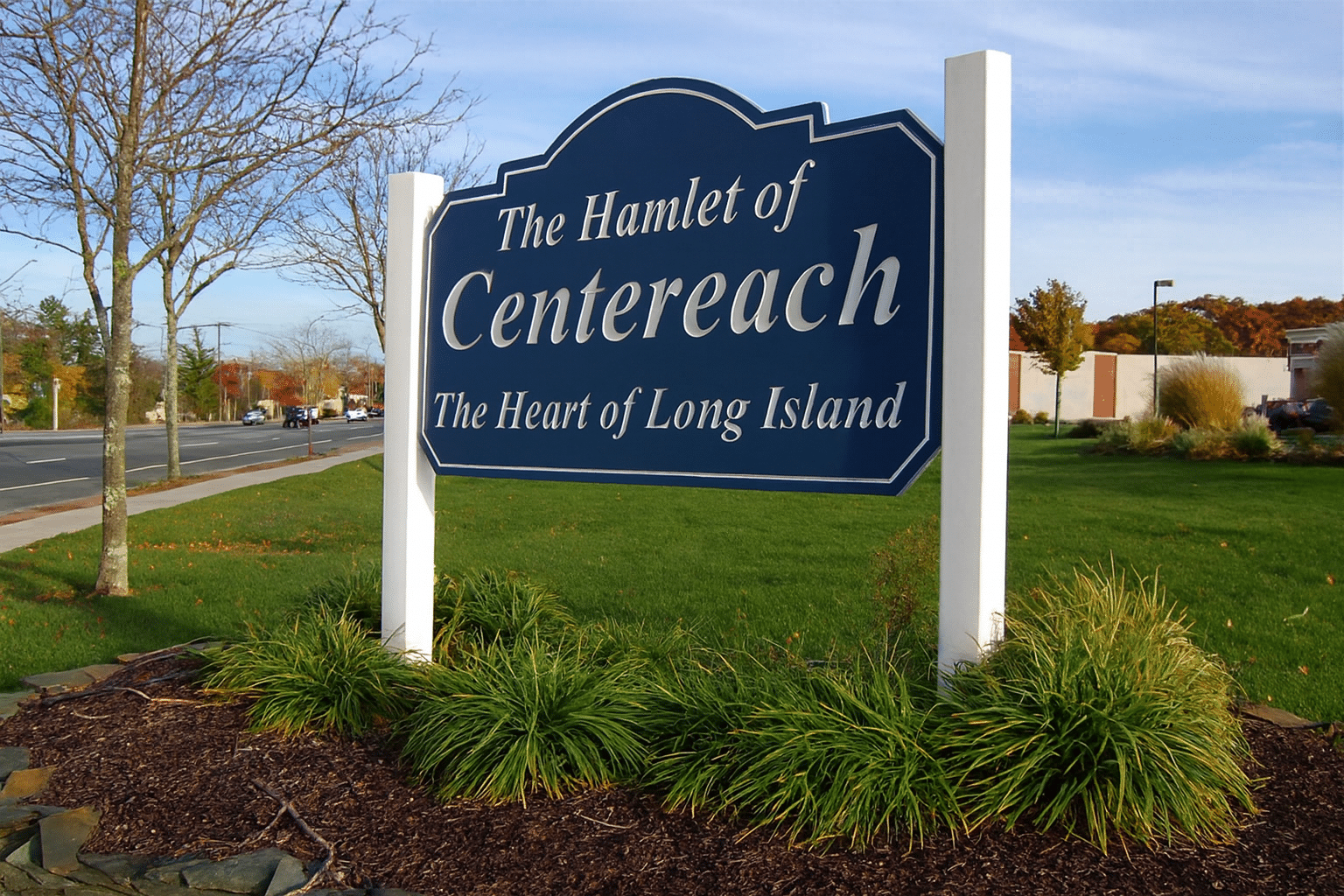
On Monday evening, Suffolk County Legislator Leslie Kennedy (R-Nesconset) held an open forum for residents of Centereach to discuss ongoing problems and improvement suggestions for the hamlet. The meeting was held at the Centereach Fire Department on South Washington Avenue.
The meeting was an open forum where grievances could be aired and brought directly to elected officials. Kennedy was joined by Assemblywoman Rebecca Kassay (D-Port Jefferson), Brookhaven Highway Superintendent Dan Losquadro (R-Shoreham), and representatives for Congressman Nick LaLota (R-Amityville), Suffolk County Legislator Nick Caracappa (C-Selden), Assemblyman Doug Smith (R-Holbrook), and Brookhaven Town Councilman Neil Manzella (R-Selden).
Centereach Civic Association President Leah Fitzpatrick was also in attendance, as were board members of the group.
Kennedy has hosted a similar meeting in Ronkonkoma that was widely received and allowed constituents to submit their concerns directly to elected officials, often resulting in a fast-tracked solution to quality-of-life issues.
Traffic
Chief among concerns of Centereach and Middle Country residents was traffic, particularly along Hammond Road and Nicolls Highway (CR-97). The section of Hammond Road in question is a small stretch that lies northeast of the intersection at Nicolls and Hammond, just south of Centereach Park. Residents are furious that motorists take the off-ramp from the highway and continue high speeds down their residential street.
One resident said that his wife can’t get out of the driveway due to the constant flow of vehicles traveling at high rates of speed. Even when traffic is light, cars still speed down the road at 50 to 60 miles per hour. This past winter, the resident said one motorist must have been traveling upwards of 90 miles per hour, striking a parked vehicle and capsizing his car.
“In the thirteen years we’ve owned the house, the traffic has gotten worse and worse,” said the resident. “Since COVID, a lot of people have moved out here and it’s gotten ten times worse.”
He added that some residents feel the traffic has worsened since the traffic pattern was changed at the intersection of Nicolls Highway and Wireless Road, just west of Hammond.

Highway Superintendent Losquadro (pictured above) said the difficult aspect of mitigating traffic problems is that “morality cannot be legislated.”
“I have a lot of authority granted to me under New York State Highway Law. One thing that’s not granted to me under New York State Highway Law is enforcement powers. That falls solely to the police department,” said Losquadro. “We can put up signs and turning lanes, but if people are going to ignore it, they’re going to ignore it. Now, that’s not to say that we cannot engineer certain things to make a situation better.”
Losquadro said that he will consult with the Suffolk County Department of Public Works (DPW) to search for a remedy, but that State and federal guidelines on traffic safety might put some parts of the problem out of his jurisdiction. He cautioned, however, against petitioning for stop signs as a solution for speeding, as it can cause “unanticipated problems” when drivers do not make full stops.
“The County has a lot of long-term plans for Nicolls Road,” said Losquadro, adding that his Traffic Safety Division will “certainly look at” the problem at Hammond. He also mentioned ongoing work at Stony Brook Road, Nicolls Highway, and State Route 347 that will attempt to curtail dangerous maneuvers, such as illegal left turns.
Quality of Life
Another top concern is that of aesthetics, as many residents complained of weeds overgrowing the sidewalks and spilling into the asphalt. The Town Code stipulates that the upkeep of and snow removal from sidewalks is incumbent upon the adjacent property owners. Councilman Manzella’s representatives spoke of ticketing offenders, but that the owners continue to pay fines and not bring their properties up to code. They discussed the idea of having Supervisor Dan Panico (R-Center Moriches) spearhead a direct initiative with the offenders.
One resident said the weeds are overgrown from Nicolls Highway all the way to Stony Brook Road in Lake Grove. The cycle of frustration, as residents say, starts with property owners not maintaining their sidewalks, instead passing the buck to the State, since the State owns Middle Country Road. The State, however, then kicks it back down to Brookhaven, who lacks law enforcement abilities on the matter.
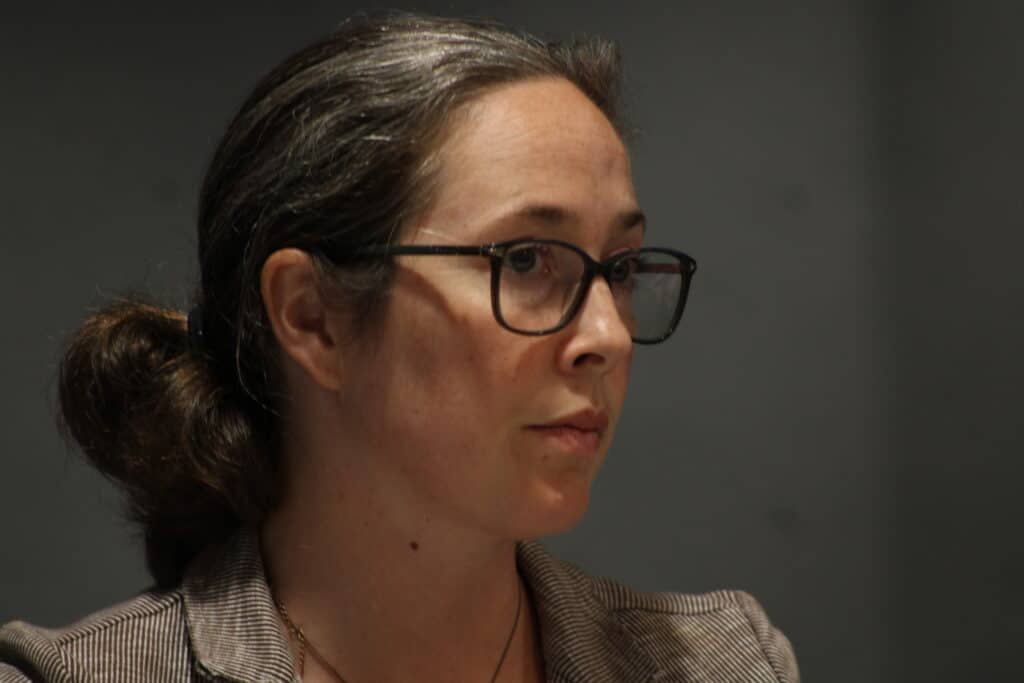
Assemblywoman Kassay (pictured above) spoke highly of her cooperation with Assemblyman Smith’s office, particularly on ensuring their districts receive earmarked funds specifically for infrastructure.
“Our roads are some of the densest per mile in the state,” said Kassay. “If there are weeds and cracks on the asphalt of a State road, please let our offices know.” She added that neither her office nor Smith’s will “pass the buck” to one another based on district lines. They will both work collaboratively for Centereach on this issue.
All elected officials recommend that residents submit photographs of problems, as it makes it much easier to pinpoint a problem and delineate governmental jurisdiction on exactly which entity owns which aspects of the infrastructure.
The quality-of-life issues perpetrated by property owners who fail to keep aesthetics up to code does, however, make a stronger argument for redevelopment.
“A lot of Centereach is asphalt-to-concrete,” said Thomas Heinlein, Councilman Manzella’s Chief of Staff. “As businesses redevelop, we want to see some green space and a landscaping plan so that it’s not another property with overgrown grass. But holding these owners who are actively violating the law is a difficult task.”
Heinlein pointed to the redeveloped properties just west of Nicolls Highway on Route 25. The properties are set back from the street and offer some landscaping as a buffer between the asphalt and the sidewalks. He also spoke of the overall ongoing redevelopment plan, as property owners cannot be forced to purchase empty storefronts, nor can they be forced to redevelop existing properties entirely. However, the ongoing sewer study for Middle Country would allow empty storefronts to turn into restaurants and other forms of attraction for the community. The dissolution of the Town Planning Board into the elected Town Board has, according to Heinlein, cut red tape on the matters and decreased costs and the requirements for multiple hearings so as to fast-track some proposals.
Loitering and late-night use of parks and parking lots is also a nuisance to residents, particularly at Assumption Church on Crowns Acres Road. Elected officials said that law enforcement needs a signed affidavit by the property owner to remove people who are there unlawfully.
Parks
Attendees spoke highly of the Middle Country Sports Complex in Selden, but Selden Vice President Stephanie Larkin asked if the lights could be tailored to be used more efficiently.
“The lights are on for way too long, late at night. I think we’re wasting taxpayers’ money by keeping them on until 10:00 or 11:00 at night,” said Larkin, adding that the lights should stay on if “a game warrants it, of course.”
Larkin and others also spoke of some parks not being “welcoming”, in that there are “few tables, benches, and playground equipment.”
The Town representatives answered that some parks were not only underutilized, but also hot spots for vandalism and graffiti. Picnic tables were especially a “huge site of graffiti”, according to Heinlein. Instead, such amenities have been removed from the underutilized parks, which have been turned into “pocket parks.” The area is considered open space and can never be developed.
Odds and Ends
Elected officials also answered concerns of e-scooters and e-bikes being ridden on roadways, particularly by teenagers. Assemblywoman Kassay spoke of the possibility of the State regulating such vehicles that can travel above a certain speed, as some of these vehicles can reach speeds of 50 miles per hour and are unregulated on the roads. Legislator Kennedy (pictured below) said that such vehicles shouldn’t even be used on the roadways at all. The legislators stressed, however, that those vehicles shouldn’t be unobtainable outright, as it would sacrifice this era’s form of independence for teenagers.

Residents also complained of hordes of feral cats being fed by neighbors that cause unpleasant odors and constant mewing around their properties. The Town has a task force to help with those cat colonies. Some have made small shelters for cats in the sumps, requiring their removal by the Highway Department. Cat food left out at night often attracts raccoons.
Any comments and concerns can be forwarded to the offices of the mentioned elected officials.