


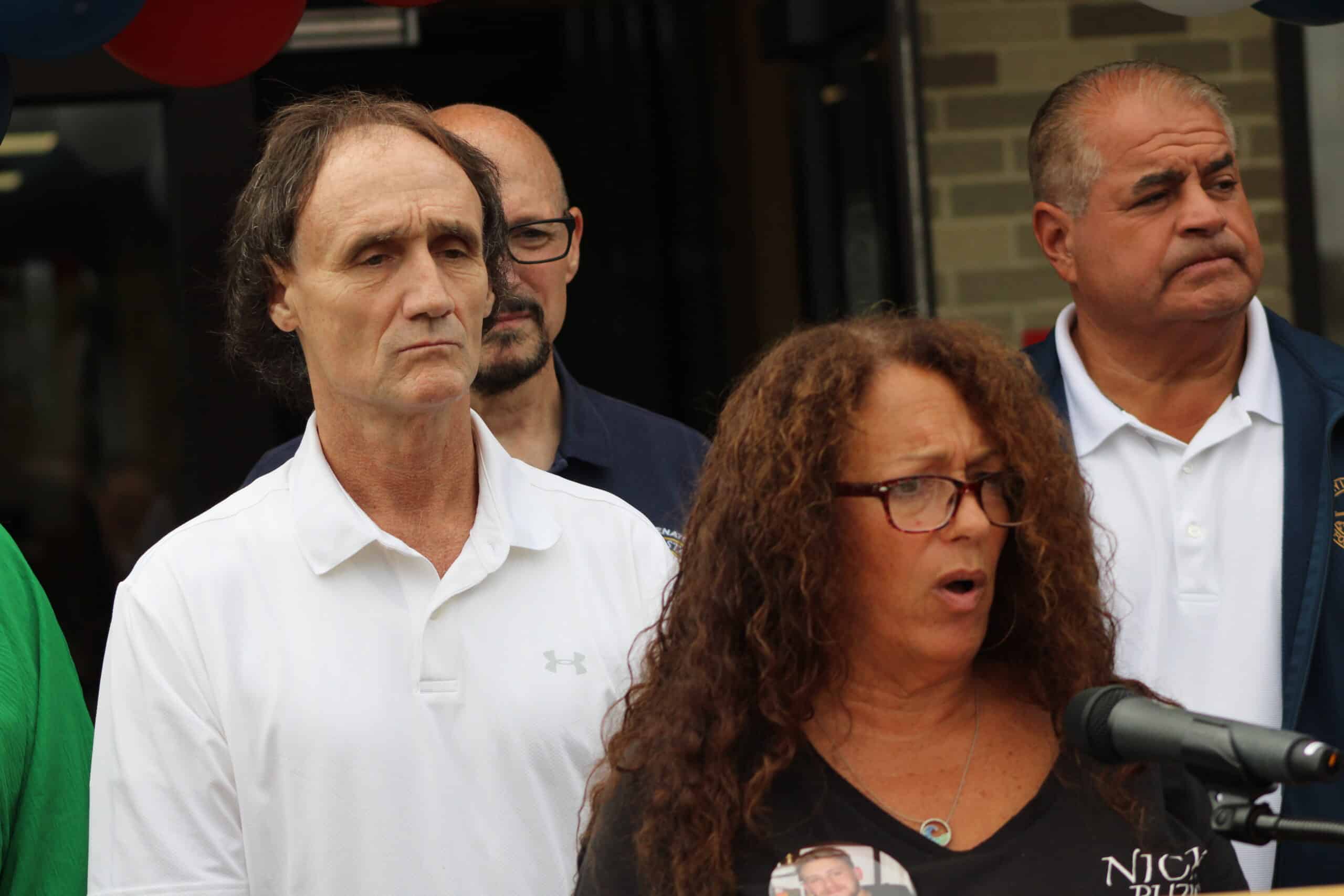
Cover photo: Santo and Terry Puzio
Almost three years ago, Nick Puzio, 25, of Farmingville, was tragically hit and killed by two separate motorists in the middle of the night in Medford. Neither stopped to render aid and Puzio later succumbed to his injuries at Long Island Community Hospital in East Patchogue.
Since then, his family, grappling with the loss, has turned the tragedy into an inspiration for change.
On Saturday, the Farmingville Fire Department hosted the third annual blood drive in Nick’s honor, while elected officials took time to discuss much-needed change on the State level.

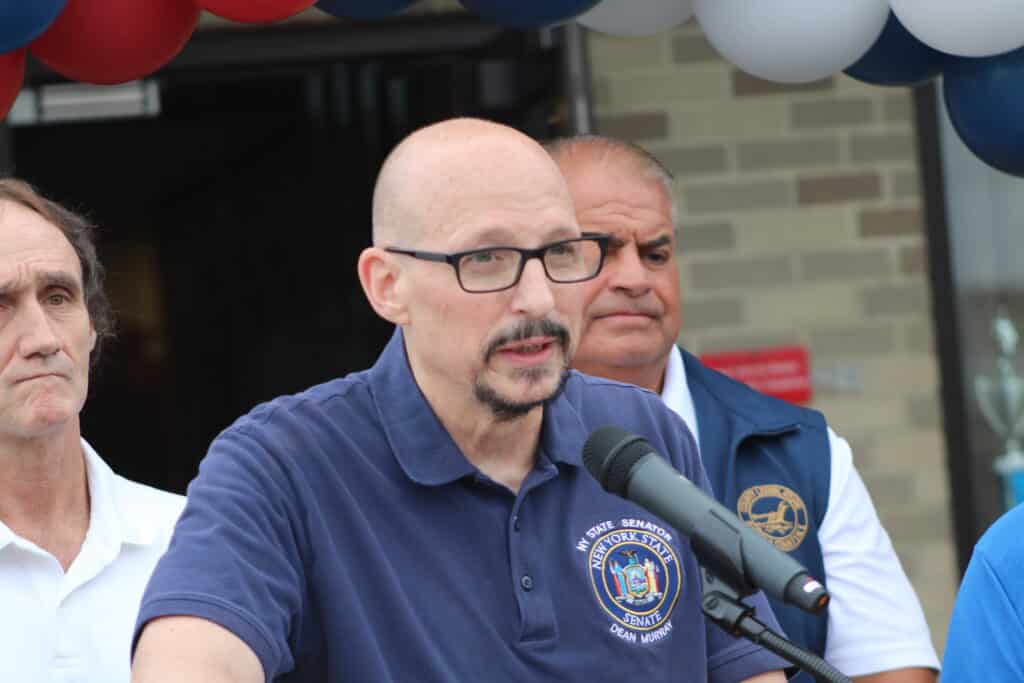
Senator Dean Murray (R-East Patchogue) (pictured above) has perennially sponsored S.3639, also known as “Nick’s Law”, which would increase penalties for drivers who flee the scene resulting in a fatality.
“It’s not an accident that you got behind the wheel impaired. It’s not an accident that you fled the scene. You chose to do that,” said Murray. In 2018, the number of fatal hit-and-run accidents in New York was 61, which Murray called “alarming in itself”, with a total of 54,000 hit-and-run accidents that year. In 2021, the State legalized the recreational use of marijuana, which was followed by 128 fatal hit-and-run accidents.
“You can’t tell me there isn’t a correlation,” said Murray.
Suffolk County Legislator Nick Caracappa (C-Selden) said the proposed legislation is a “common sense” change.
“What else does it take to get this piece of legislation passed? We’ll get together as long as it takes to get this bill passed,” said Caracappa.
A representative from Mothers Against Drunk Driving (MADD) shared that the foundation provides assistance to families in court, 100% free of charge.
Nick’s parents, Santo and Terry Puzio, memorialized their son.
“Nick had so much to live for. Losing my son has been the single-most unimaginable loss I could ever endure, and we’re all learning to try to live through this every day,” said Terry. Nick is also survived by his two siblings. “A parent should never have to see their child die.”
Terry added that while they can’t change what happened to Nick, they can change the laws in New York.
“This has become an epidemic on Long Island. New York needs harsher penalties and sentencing in fatal hit-and-run cases,” said Puzio. “This isn’t a partisan issue; this is a humanitarian issue. The two men that killed Nick got less than six months in jail and five years probation. Does that seem logical? Where is the justice in this?”
Alissa and John McMorris (pictured below) were also in attendance. The couple lost their son, Andrew, in 2018. While hiking with his Boy Scout troop, McMorris was hit and killed by a drunk driver. His surviving family has started the Andrew McMorris Foundation, which aims to create “opportunities for education, advocacy, and positive change,” according to their website.
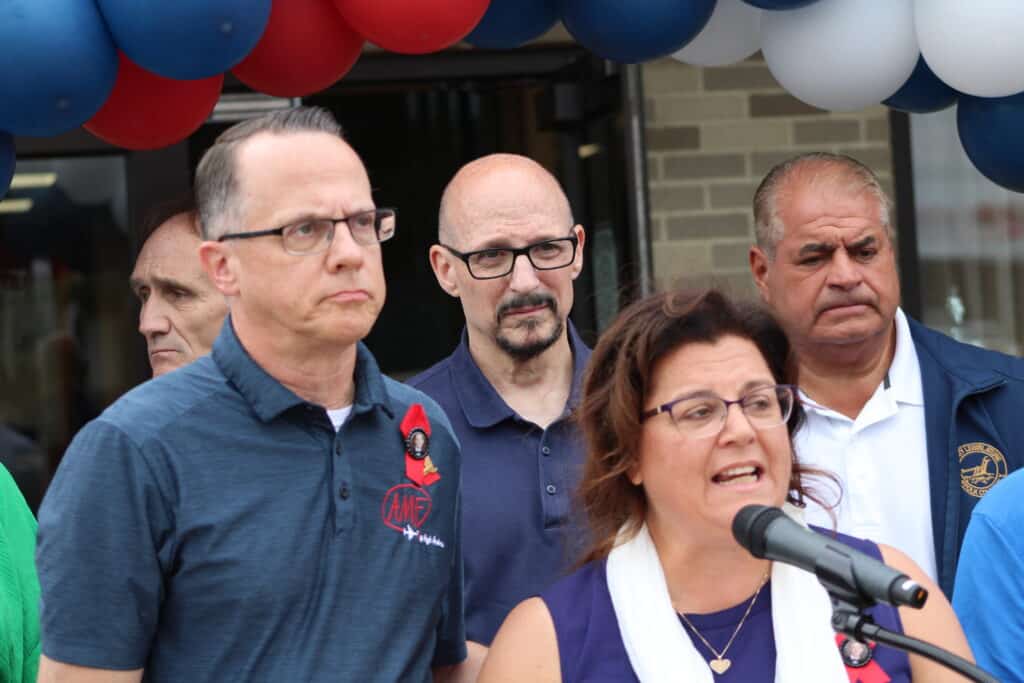
“We have joined a club that no parents want to be a part of,” said Alissa McMorris. “Our vehicular crime laws in New York are inadequate. I’m speaking to the Legislators in Albany, when you’re looking at these bills and reading these words, I need you to see Nick’s face. These are not faceless crimes; there are human lives behind them. We believe victims deserve justice and future tragedies must and can be prevented. We owe it to Andrew, to Nick, to every life lost.”
Present also were relatives of Angelica Nappi, a passenger in a car who was broadsided by a driver whose license had been revoked that very morning, as well as the mother of a volunteer firefighter who was hit and killed by a driver who then went to lengths to conceal her vehicle to escape justice.
“It’s frustrating doing these press conferences over and over again, but if we don’t give up, eventually we’re going to break through,” Murray told The Messenger, regarding the optimism of passage of Nick’s Law next session.
District Attorney Ray Tierney (R) said, “it’s not about rhetoric; it’s about results.”
“The Second Chance Act sounds great, but it’s like the ‘Fifteenth Chance Act.’ It’s all about rhetoric [in Albany], not results,” said Tierney. “They’re not looking at the statistics and what’s happening in the streets and applying that to common sense legislation.”
Tierney also calls Albany’s inaction “unbelievably frustrating”, particularly in closing loopholes in drugged driving penalties, wherein he and advocates are not “asking to increase penalties”, but to make the laws “more workable.”
“We’re in a state where we have people who want to coddle the criminals and make excuses for them,” said Murray.
McMorris said that the foundation runs a “choices and consequences” campaign in the schools, and offenders have even said that if they had not been arrested, they would be dead.
“They said that their arrest and rehabilitation was a wake-up call,” McMorris told The Messenger. “I am all for rehabilitation. I am a physician’s assistant; my job is to remove pain from people. But some people need that stern talking-to and that cold cell.”
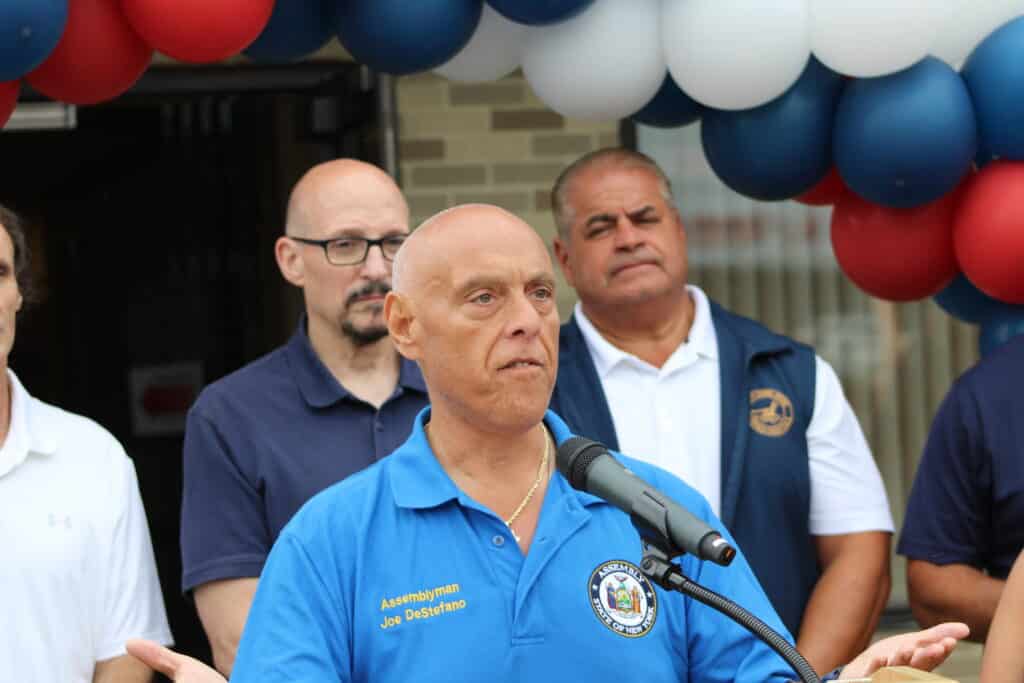
Assemblyman Joe DeStefano (R-Medford) (pictured above) added that some penalties would “never be enough” to replace the heartbreak that families face.
“Accountability is paramount, because the punishment will never fit the families’ expectations of what it would take to make their lives whole,” said DeStefano.
Assemblyman Doug Smith (R-Holbrook) (pictured below) lays the blame of the overall problem at the feet of New York City.

“A lot of our folks in the city seem to think that every time a law is broken, it’s society’s fault,” said Smith. “But look at why we’re here today; society didn’t do this. These are preventable deaths. We’ve legalized rideshare services. We’ve made it so easy that if someone cannot operate a motor vehicle, there is no reason they should be on the roadway.”
Smith sent a message to his Big Apple colleagues, “These people are not just out here in the suburbs; they’re your constituents too in many circumstances.”
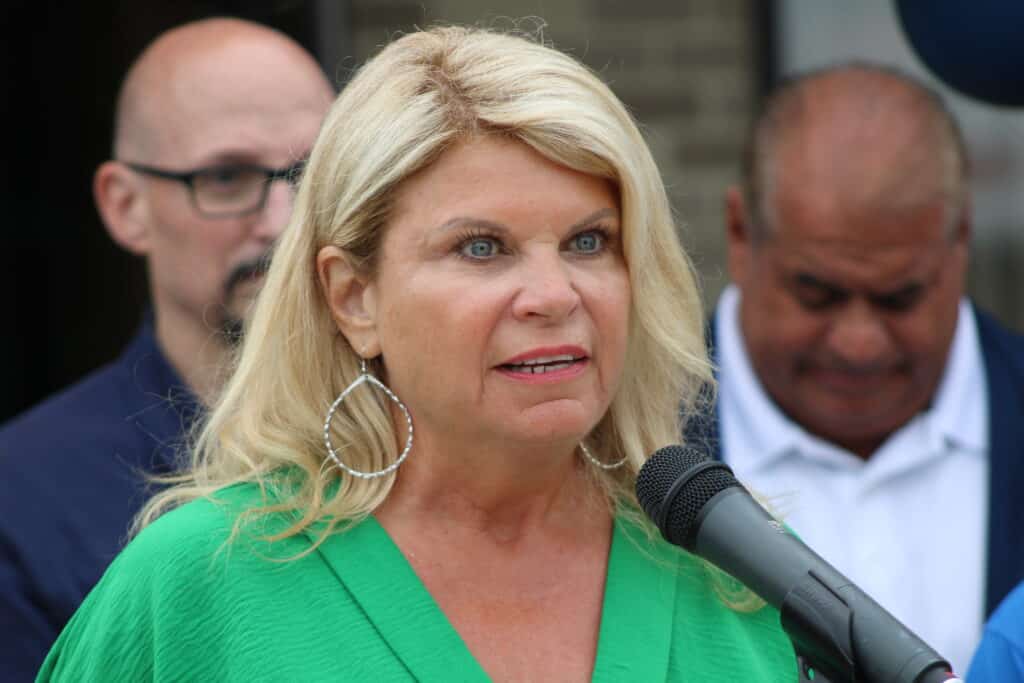
Assemblywoman Jodi Giglio (R-Baiting Hollow) (pictured above) said that this issue should be just as important to the legislators as it is to the families, but posited that lack of proximity might be a deterrent to action.
“Unless something personal happens to one of the legislators, they don’t have the power to say, ‘this happened to me.’ It should be important to them now,” said Giglio.

