
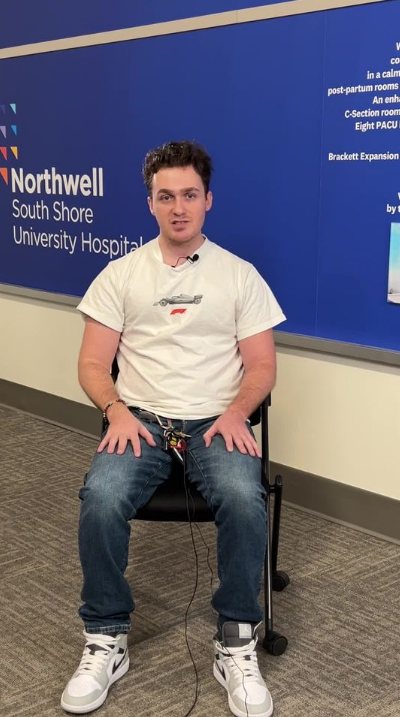
Christopher Barradas, a 22-year-old Kings Park resident, was living the life of a typical young adult, spending time with friends, enjoying his family, loving his dog, staying active in the gym, and embracing life to the fullest.
That all changed in September 2025, when he was involved in a catastrophic motorcycle accident that nearly claimed his life.
Barradas was rushed to South Shore University Hospital in critical condition, where his chances of survival were slim. But through his own determination and the extraordinary efforts of the hospital’s medical team, he defied the odds. Today, Barradas is not only alive but also able to personally thank the doctors, nurses, and staff whose skill, dedication, and quick action helped save his life. He did so when reuniting with the team back in February, which is impactful not only for Christopher but also for the team.
Two of the doctors who treated Christopher almost immediately upon his arrival were trauma surgeon Dr. Bank and thoracic surgeon Dr. Fallon. Both said the condition Christopher was in when he reached the emergency room was a worst-case scenario. At the time, they knew very little about him or the details of the crash, only that he was young and had been involved in a motorcycle accident.
Dr. Bank told The Messenger he quickly realized the severity of Christopher’s condition, noting that he had dangerously low blood pressure, was unconscious, and was suffering from bleeding in his chest.
A chest tube was placed, and Christopher was immediately rushed into the operating room as doctors worked to stop the bleeding. It was there that they realized just how extensive his internal injuries were. At that point, the medical team was unable to determine whether he had suffered any additional trauma elsewhere in his body. Their sole priority was controlling the life-threatening bleeding in his chest.
Surgeons performed a clamshell thoracotomy as well as a sternotomy and spent hours attempting to repair the damage. Christopher required multiple units of blood due to severe loss. He was later transported to the intensive care unit with his chest temporarily closed, but soon became unstable once again, forcing doctors to perform another emergency chest surgery at his bedside in the ICU.
Dr. Fallon said that at that point, it was all hands on deck, with team members from multiple departments coming together to effectively transform the ICU room into an operating room. For several more hours, doctors worked to stabilize Christopher and replace the blood he had lost, eventually bringing him to what they described as a somewhat manageable condition.
Dr. Fallon later left for home, only to receive another call that Christopher’s condition was declining once again. He returned immediately, but upon arrival, Christopher appeared to no longer need another surgery. Throughout the ordeal, Christopher coded multiple times and required hours of resuscitation efforts.
Doctors spoke candidly with Christopher’s family, telling them they did not believe he would survive the night. They explained that even if he managed to overcome the slim odds, he likely would never be the same.
Dr. Bank said that based on the catastrophic bleeding in Christopher’s chest alone, he estimated there was only a 5% to 10% chance of survival. At that point, doctors had not yet been able to perform additional scans or testing to determine whether he had suffered other serious injuries elsewhere in his body, meaning those odds were based solely on the chest trauma and could have been even worse.
Dr. Fallon said Christopher suffered a catastrophic chest injury that extended from the left side of his chest to the right, fracturing his sternum in multiple places. The force of the impact caused devastating internal damage, including trauma to his aorta and torn arteries near the breastbone. He also suffered tears to both lungs and severe bleeding from multiple broken ribs.
Both doctors agreed there was no margin for error and that every second mattered. Dr. Bank said the entire trauma team spent more than twelve hours doing everything possible to keep Christopher alive. Dr. Fallon said every team member did what they could to buy him time; there was no break in any step, which kept Christopher alive.
He explained that Christopher had lost so much blood that there were moments when he and Dr. Fallon were unsure whether it would even be possible to stabilize him. The situation became so dire that they were forced to confront whether continued efforts would be enough, but despite the overwhelming odds, the team never stopped fighting for him.
By the next morning, doctors were surprised Christopher was still alive. No additional surgeries were needed, and further testing revealed he had not suffered any other catastrophic injuries as severe as the trauma to his chest.
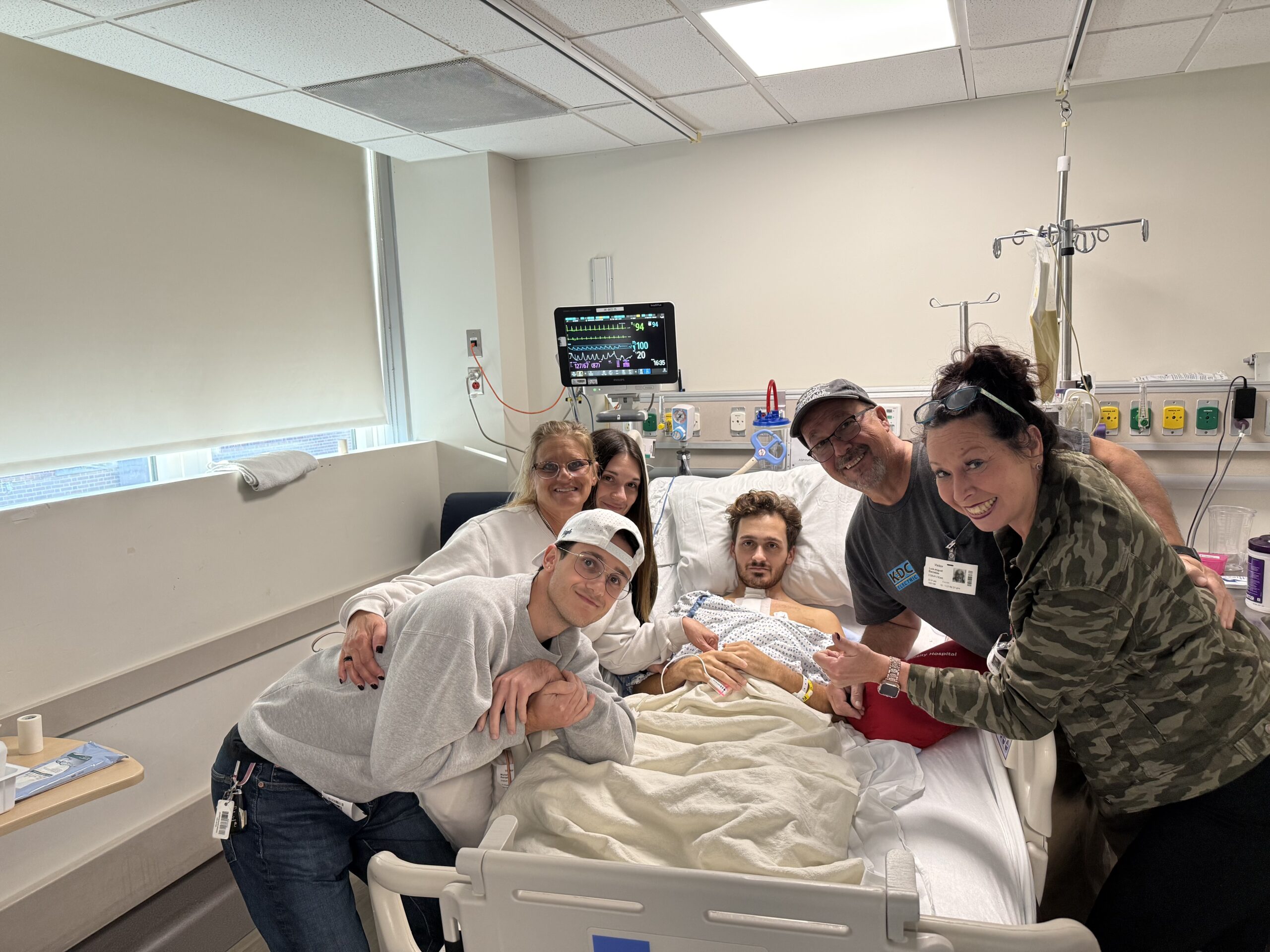
For the next two weeks, Christopher remained unconscious as he continued to fight for his life. During that time, doctors told his family they were uncertain whether he would ever wake up.
That changed one day when the nurses on shift told the doctors that Christopher had begun fluttering his eyes open. At first, they were unsure, but as the days passed, more staff members realized it was true.
Dr. Bank said Christopher continued to make progress each day. First, he opened his eyes for a minute, then two. Soon, he was able to follow simple commands such as closing his fist and nodding his head. From there, he began staying awake longer, speaking, and eventually taking steps. It was then that doctors realized the young man was truly on the road to recovery.
“He should not have survived this, in reality,” Dr. Fallon said. “If you presented this case at a national conference and explained the scenario and what happened, everyone would say, ‘there’s no way this kid survived.’”
Today, Christopher is back to living a largely normal life and has made a recovery so remarkable that it is as if the accident never happened. Both doctors said they have remained in touch with him since he left the hospital and described his progress as nothing short of shocking.
Christopher previously told Northwell Health how deeply grateful he is to everyone who helped save his life and said the experience has made him appreciate life even more.
Both doctors said cases like his are the reason they do what they do.
Dr. Bank said there were countless people to thank in Christopher’s recovery, from the EMTs who first responded to the physicians, nurses, and physical therapists who cared for him throughout the process. He said every person involved played a role in making the outcome possible.
When Christopher was finally discharged after months in the hospital to continue his recovery at home, staff lined the hallways, clapping and cheering as he left. But Dr. Bank said the applause was not only for Christopher, but it was also for every member of the team whose efforts helped save his life.
Nicole Cervone, a CCRN-certified nurse who played a key role in the case, told The Messenger, “Teamwork in the healthcare setting is always extremely important. It’s never one person who saves a life. Staying focused, keeping composure, and communicating with each other is crucial to saving someone like Chris.”
“I have been a nurse for four years now, and I can confidently say I’ve never seen a group of people more focused and clear-headed in such an intense situation. In healthcare, there are a lot of big brains working at once, and sometimes it can get tricky when making decisions about what is best for the patient, but everyone worked so well together.”
Christopher’s story is one that few thought would end this way. A young man doctors believed might not make it through the night is now back to living his life and moving forward. His recovery also stands as a testament to the EMTs, doctors, nurses, therapists, and countless hospital staff members whose skill and dedication helped make it possible. For those teams, seeing Christopher healthy again