The world of sports is continuing to modernize and evolve each year. Along with that, the outdoor athletic fields are receiving upgrades. Is it grass, or is it turf? The Messenger sat down with New York University Langone Doctor Mark Grossman to discuss the pros and cons and give insight into how athletes are affected by the surface they play on.
“I get to specialize after five years of training. During orthopedic surgery, you specialize in what they call subspecialty, and I did a sports medicine fellowship at the Kerlan-Jobe Orthopedic Clinic, which is a famous sports Medicine Center in Los Angeles. We do surgery involving mostly shoulders, elbows, knees, ankles, hips, and, joints, doing what we call arthroscopic surgery, where we use a camera and small incisions to repair structures like tendons and ligaments and linings of the joints,” said Dr. Grossman.
Grass gives off a natural look and feel. With it being a natural surface, it’s known to be softer and mold to the way the earth is shaped. Grass is also typically cooler than synthetic turf in warmer weather. Opposingly, grass isn’t shielded from the effects of wear and tear. Divots, dirt patches, or any sort of obscurity from a perfectly manicured lawn has the potential to wreak havoc on an athlete.
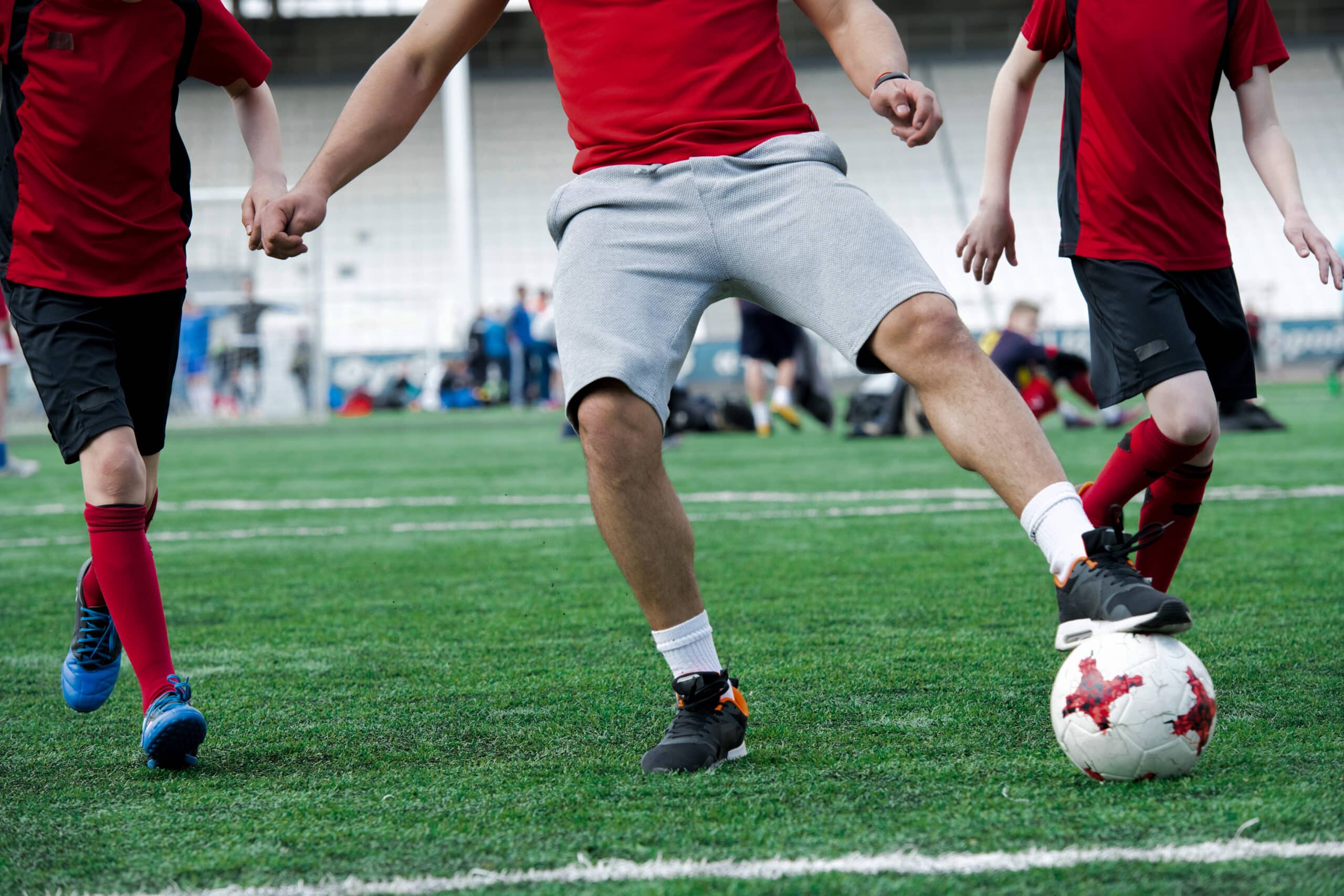
Artificial turf is making its way to the sports world in the form of field upgrades. Turf is said to be more durable and have a longer lifespan than natural grass. Artificial turf is capable of holding up against bad weather and intense activities. For sports, turf provides an even playing field. The surface is level and won’t spring surprises on an athlete while playing on it. Artificial turf can be played on in any weather due to the drainage system in place.
“It’s so funny because they went from a solid turf to this more softer turf, which is made of ground-up tires, but it’s really not so much the surface. The research is really put in the shoe, the ground interface, where people are trying to develop the right shoe. If you wear a heavy-duty cleat on turf, it may grab too much, and that’s when you twist around your knee. So, really wearing the right shoe, a turf cleat when you play on a turf and a regular cleat when you play on the grass is probably the most optimal,” said Grossman.
Shoes are the most important article of “clothing” you can wear to protect your body. Different types of shoes are made for different activities. Finding the right type of cleat that’s comfortable but also cohesive with the playing surface is crucial.
“Although it’s not 100%, because 70% of ACLs are non-contact, so unfortunately, a person ground their foot and twist around their knee. A lot of that research has been put or is being put into what kind of shoe is for the best surface. It’s just not perfect, so we attempt it, but it’s not foolproof,” said Grossman.
Turf cleats are composed of small, dense rubber studs on the bottom that aren’t long enough to dig into the turf, but still long enough to create traction on the field to remain upright.
“We do find that for women, there are preventative things, because there’s a higher incidence, almost eight times more incidence in female ACL injury than in males. We think that getting them to run with more of a knee bend protects them. So, there are strategies or pre-op warms, sort of like what they call a PE program or plyometrics, to kind of get them to bend when they run so that hopefully when they jump, they land more with a bent knee,” said Grossman.
An article conducted by The Washington Post in 2023 states that since 2021, roughly 90 female soccer players have torn their ACL playing professionally. Female soccer players are two-to-ten times more likely to injure their ACL than their male counterparts, according to Dr. David McAllister, an Orthopedic Surgeon at UCLA.
“If you have a surface that has a little give so you don’t get shin splints and all that, because if you’re running on hard surfaces, then you affect your bones when you run, where they can get stressed. So, you want a little give to protect from stress fractures or stress reactions, but you don’t want it so much that the foot is going to sink in where you’re going to get more traumatic injuries,” said Grossman.
There is no ideal surface, as each offers its own set of benefits and risks. The most important thing an athlete can do is come prepared and know what they’re playing on to best prevent injury.
“They’ve gone through a lot of iterations. It seems that they’ve settled on this tire one [artificial or synthetic]. It still doesn’t prevent all your injuries. I don’t think to my knowledge they have a study to say it’s more or less than the grass,” said Grossman.
Dr. Grossman stressed the importance of having proper footwear throughout the conversation. With limited research on ACL injuries being linked to playing surfaces, he didn’t favor one over the other.
“It’s tough to recommend because I don’t think the data is really out there. The weather can be freezing, and now you’re out on a hard surface in bad weather. You can have a muddy surface on regular grass, and now your cleat can get caught. It’s tough to recommend either. I just recommend having a turf cleat for a turf field and a regular cleat for a regular field. It’s really the interface of the shoe with whatever you’re playing on. I think that’s the thing that people may have to do a little research on what field they’re going to when they’re going away,” said Grossman.
Fortunately, in today’s world, with the technology and research we have, we see a higher success rate for athletes with ACL injuries in terms of being able to play again.
“Most ACL reconstructions, most of our surgeries, thank God, do well. We can’t bat a thousand, but we try to bat as close as possible. But I think that most players, with good surgery and the proper rehab, can get back to the level that they were,” said Grossman.