


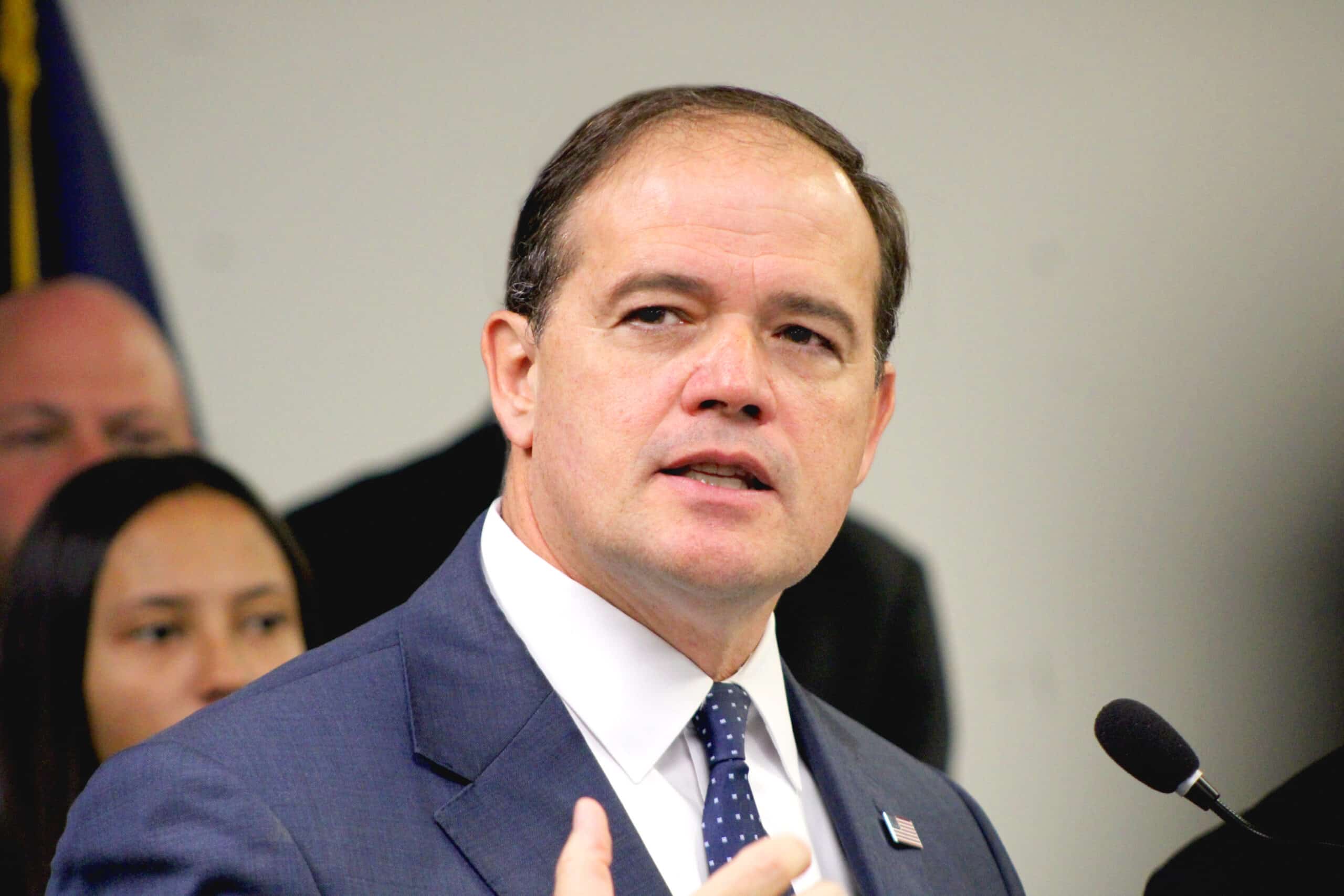
Cover photo: D.A. Tierney in Riverhead (Credit – Matt Meduri)
For more than a decade, the Gilgo Beach murders have haunted Long Island. A lonely stretch of dunes and scrub pine became a cemetery for women discarded as if their lives held no more weight than driftwood washed ashore. The case, mired in false leads and bureaucratic inertia, became a symbol of delay and neglect. For many, it stood as a damning question: did the system care enough about the victims to ever deliver justice?
Now, with a suspect in custody and the courts preparing for trial, Suffolk County finds itself at a crossroads between justice delayed and justice delivered.
The Man on Trial
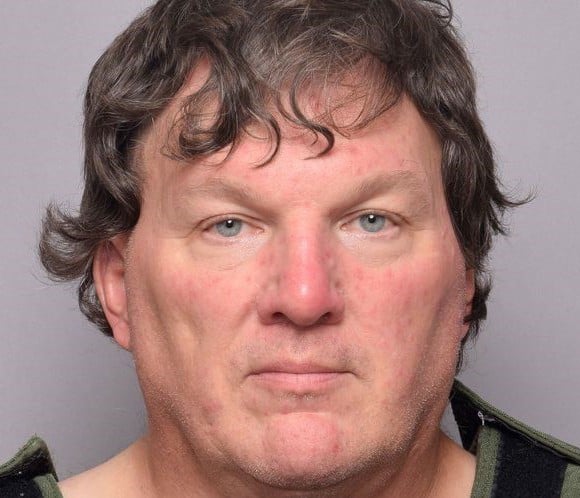
At the center is Rex Heuermann, a 61-year-old Manhattan architect accused of murdering seven women whose remains were found along Ocean Parkway between 1993 and 2011. He has pleaded not guilty. His fate will be determined in court. But the trial is bigger than one man. It is a referendum on how law, science, and society respond when the vulnerable fall prey to the violent.

The DNA Revolution
The true breakthrough is not only in the charges but in the science. Suffolk County Judge Timothy Mazzei has allowed prosecutors to use cutting-edge forensic methods—whole genome sequencing and nuclear DNA analysis—on decades-old, rootless hair fragments.
It is the first time such techniques have been admitted in a New York courtroom. Traditional DNA testing requires intact roots; these samples had none. Without this technology, the case might have remained forever obscured, as hazy as the fog rolling off the Atlantic.
Prosecutors say the science now links Heuermann to six of the seven victims. Defense attorneys object, pointing to licensing disputes and jurisdictional technicalities. A hearing on September 23 will decide how much of this evidence survives. But the implications reach far beyond Suffolk: if accepted, New York could join the ranks of states where advanced DNA is legitimate courtroom proof, a precedent that may unlock hundreds of cold cases nationwide.
A Grisly Discovery at Jones Beach
Even as the courts weigh science, the ground itself continues to yield grim reminders. This month, workers near the East Bathhouse at Jones Beach unearthed a cache buried beneath two feet of sand: purses, rayon skirts, torn shirts, and a glove stained with blood.
The symbolism was stark. Jones Beach, built by Robert Moses as a shrine to leisure, now revealed artifacts of violence. Detectives noted burlap fencing near the site—eerily similar to the burlap sacks that once shrouded the victims along Ocean Parkway.


Whether these items tie directly to Heuermann or not, they deepen the case’s shadow and remind Long Islanders that the scope of this tragedy may stretch well beyond Gilgo Beach.
Who the Victims Were
Too often, the women lost to Gilgo are reduced to labels: “the Gilgo Four,” “sex workers,” “missing women.” But each had a name, a family, a life.
- Melissa Barthelemy, 24, disappeared in 2009.
- Megan Waterman, 22, vanished in 2010.
- Amber Costello, 27, went missing that same year.
- Maureen Brainard-Barnes, 25, last seen in 2007.
- Jessica Taylor, 20, murdered in 2003.
- Valerie Mack, 24, disappeared in 2000, identified years later.
- Karen Vergata, 34, missing since 1996, identified in 2023.
Their lives were cut short, their dignity often diminished by the circumstances of their disappearance. But their humanity—not the evidence bags or trial transcripts—must remain the anchor of this story. Without it, justice becomes sterile, stripped of the very reason it matters.
The Broader Lesson
There are two trials unfolding. One asks: did Rex Heuermann commit these crimes, and can the state prove it? The other asks: can our system adapt to new science while upholding fairness?
Fingerprinting was once controversial. Blood typing was once untested. Today, they are routine. Whole genome sequencing may soon join them.
But there is a deeper reckoning. For years, the Gilgo case languished in part because the victims were poor, vulnerable, and stigmatized. Only when prestige science entered the scene did the system accelerate. That fact should unsettle us all. When violence touches the powerful, armies mobilize. When it touches the powerless, the response too often withers until evidence becomes impossible to ignore.
What Comes Next
On September 23, Judge Mazzei will rule on the defense challenges and decide whether the seven charges will be tried together. The trial itself may not begin until 2026, by which time the very technology in question may already be standard.
But the larger verdict cannot wait. Gilgo Beach is more than a crime scene. It is a mirror. It reflects a culture that too easily discounts the worth of the marginalized, and a bureaucracy that hesitates when urgency is most needed.
For too long, the facts were ignored. Now, science has dragged them into the light. Whether truth can prevail—and justice can follow—will test not only the courts, but the conscience of Long Island itself.